

Business Coaching Methodology
Introduction
Coaching is about movement. It is a process in which the coachee will move from point A to point B. It is a partnership through which the coach helps the coachee achieve his goals more efficiently and faster than he would do alone. In doing so, it pushes the coachee to excel and to go out of his comfort zone.
First used in sports, coaching spread to the business world in the '80s and '90s. Economic globalization was followed by an increase of competition and a need for continuous renewal and change. Acceleration of transformations in organizations has led to a greater pressure on the leaders of these organizations in a never-ending quest for performance and efficiency. As one of the solutions, business coaching grew to support these leaders and to help them meet the growing demands they were burdened with.
Nowadays, coaching is booming (for more details, refer to the study on the reputation of the coaching conducted by ICF). Much research has been undertaken on this theme, new branches have been created and new certifications aimed at regulating the profession have emerged. That is why, it is sometimes difficult to navigate in this thriving environment.
Business Coaching Methodology
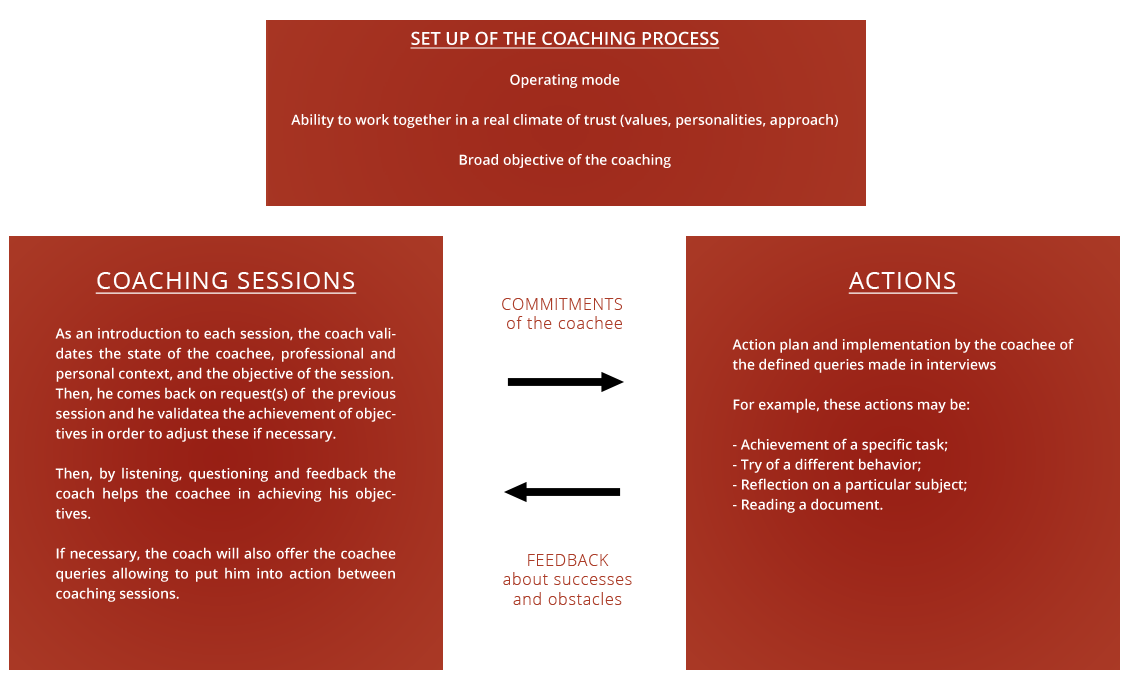
Each coaching is different and the flexibility of the coach to the needs of the coachee is a condition for success. However, the coaching process generally follows these steps:
1st step: Setting up the approach
Before undertaking a coaching engagement, it is important for the coachee to choose his coach. In particular, it is fundamental that the chemistry between the coach and coachee works and that both of them are comfortable working together in an atmosphere of trust. To confirm this, the first meeting will allow:
- The coachee to ask any questions about the process, the operating mode of the coach and his approach.
- The coach to ask questions about the context of the coachee: his mindset, his values, his professional context, his expectations regarding the coaching approach.
In the case of a tripartite relationship involving the representative of an organization, the coachee and the coach, this first step is accompanied by a discussion to clarify the three roles, the methods of operation and the expected overall objectives of the coaching process.
2nd step: Setting up the objective
A coaching mandate starts by clarifying the objective of the coaching process and the expectations of the coachee. Setting up the objective in writing should rely on the SMART method:
- Specific: The objective must be reached because of the coachee's actions.
- Measurable: The goal achievement must be quantifiable.
- Ambitious: The achievement requires efforts and pushes out of comfort zone.
- Realistic: The achievement should be possible with necessary efforts.
- Time: The objective needs a defined deadline.
3rd step: Coaching interviews
Coaching interviews form the basis of coaching. These are periods of variable duration during which the coach, by listening, questioning and providing feedback helps the coachee achieve his objectives. These meetings allow the coach to offer the coachee queries that will lead to actions to be taken in between coaching sessions.
4th step: Actions of the coachee
It is through his actions that the coachee makes the coaching process a tangible and effective one. Action means any realization of the coachee resulting from his will to move towards achieving his goals and intentions. It may be a change in behavior, the practice of a new approach, the performance of a specific task, the giving up of a habit, the readjustment of his time management, the revision of preconceived ideas, the expression of hidden truths, the verbalization of certain needs or problems…
5th step: Monitoring and adjustments
Coaching is a dynamic, living process and its results need to be monitored regularly in order to adjust goals or set new targets. This is usually performed during the coaching interviews. The coach has the responsibility to ensure that the conditions for such monitoring are met and to link actions and results to the initial objectives.
At the end of the coaching period initially set, or earlier if the coachee's goals are achieved, the partnership must be concluded by making an assessment of the collaboration and particularly of the progress the coachee achieved.